



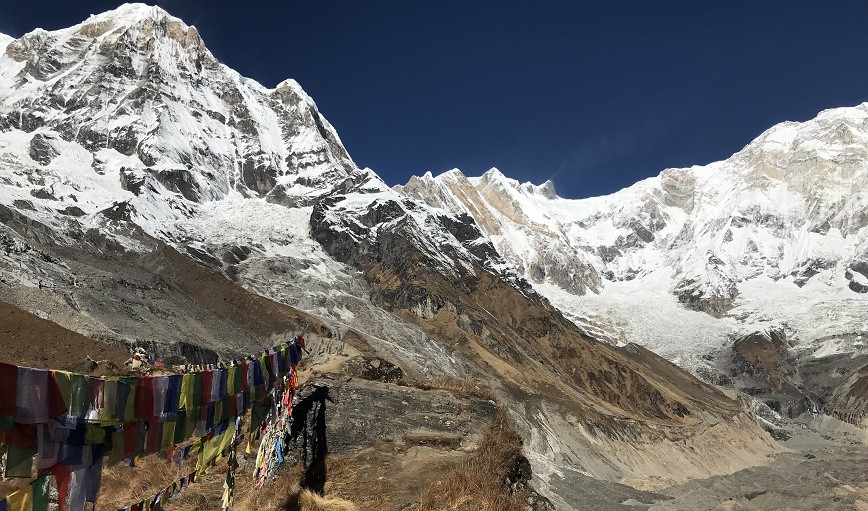

Annapurna Base Camp trek has been a lifelong ambition for many who were enticed by the idea of ‘striking out on their own’ in the Himalayas, only to rely upon their own sensibilities and strength. The concept of a solo Annapurna Base Camp Trek is that of freedom and independence! But, we also need to mention that there is a really interesting new rule change for treks in Nepal that really undermines the whole Solo treks concept of foreign trekkers. Nepal – Mandatory Guides for some National Parks & Conservation Areas. From April 1, 2023, all foreign trekkers are now required to have a licensed guide or porter-guide when trekking in Nepal’s national parks and conservation areas – including on most treks in the Annapurnas. Since then, the traditional ethic of doing your own thing kind of trek in Nepal was pretty much irrevocably destroyed by this new rule (introduced for the benefit of trekkers’ safety and also to give revenue to isolated villages).
The New Reality: The Mandatory Reference Rule
Gone — for now, at least — are the days of the Free Individual Trekkers (FITs ) on the ABC Trek. It was a direct reaction to a series of mishaps that included trekkers getting lost, falling ill with altitude sickness, or being involved in other emergencies without any help available. The new requirement is meant as a guard against that kind of risk and to ensure that each and every wilderness trekker has a trained local professional on call to assist in emergencies and to call in rescue units if necessary. For a trekker who wants to trek “solo”, you will have to have the Annapurna Sanctuary as your final destination, and you need a guide (legally a guide from this area) to trek there with you. Your planning needs to begin with that change.
Solo Trekking 2.0
You can never walk completely alone, but I guess you can feel like you do. Authority of issuance and Definitions: A solo trek on Wikipedia is when a party of trekkers has one private guide, which is in stark contrast to joining a big, pre-arranged excursion group. If you continue to make all of your personal selections, you can pressure at your own pace, you may set your very own timetable, and you may pull over for photographs or take in the surroundings every time you please. You remain completely independent and responsible, while being able to take advantage of the security and instruction that a guide provides. Freedom and security have come to be the new normal of trekking alone in Nepal.
Self-Guided Trekking
Please see what benefits you are receiving the benefits while you are doing the solo guided Annapurna Base Camp Trek. Your guide is more than your guide; they are the key to the local culture. They could introduce you to the owners of teahouses, describe the traditions of the Gurung and Magar (among others), and assist you in apprehending the significance behind the monasteries and prayer flags that you’ll discover dotting your path. Your manual can be responsible for managing all of the logistics, including permits, in addition to reserving your lodging within the teahouses, which can be a relief whilst trekking season is bustling. Which means you could totally unwind with nature and the spirituality of the Himalayas. And it means that should you have a medical emergency, you have someone who’s making the right decisions and talking to rescue teams.
How to Find and Vet Your Solo Guide
The easiest way to hire a guide is by signing on with a government-registered trekking agency. These companies employ licensed, insured, well-trained guides. You may surf the agencies online and read the client’s testimonials, and you can see whether or not the specific agency is a member of the Trekking Agencies Association of Nepal, TAAN/Nepal Tourism Board. Independent, licensed guides can also be found, and tend to be a little more open about pricing and itineraries. But even those guides will need to be connected to an agency to get your permits. Some of the key questions you should ask while talking to a potential guide are about their experience on the ABC Trekking route, their procedures for emergencies, and their English. It’s a special bond between guide and trekker and can create a world of difference.
Planning a Personalized Itinerary
The thing I enjoy most about solo-guided trails is the freedom over their itinerary you can have. Here, you can work with your guide to create a trek that moves at your pace and covers what you are interested in, an option not available during a group tour. Feeling weary? It is always pleasant to add an extra rest day at a pretty village like Chhomrong. When you have the energy, you may add a side ride to Poon Hill for a wonderful dawn to the itinerary! In this flexible manner, you may definitely take into account the way your body is feeling and pass at a tempo that makes the experience for you, which is absolutely the best thing you could do to avoid altitude sickness.
Recommended Reading: The Solo Trekker Report: Safety First
Anyone who undertakes a solo journey to the underworld without assistance has to rely on his or her own powers of observation and assumes the consequences of that decision. You need to have travel insurance, which must include high altitude trekking and helicopter rescue. You’ll also want to have a small personal first aid kit, water purification methods, and a portable power bank for electronics in your gear. Let your guide know, no matter how mildly, if you are not feeling well at all. Headaches or lack of appetite may be one of the earliest symptoms of altitude sickness, and this is valuable information for your guide as he is watching and making judgment calls about what is best for you. The guide is the security blanket, but the awareness is your decision.
The Sociable Trail
Solo trekking, it’s not as lonely as it sounds. As a solo hiker, I am positive you won’t have any problem making buddies available. They can also put you in touch with other trekkers or local families, turning the trip into a source of rich human contact. The trial is the place of your being, not your alone.
Budgeting for Your Solo-Guided Trek
The latest rule guide is included in the ABC Trekking Cost. You won’t save on this cost, but a solo guided trek is still cheaper than a big tour, including porters, hotel in the cities, etc. But if you drink local Dal Bhat and sleep in simple teahouse rooms, you can still swallow the food and lodging costs. You’ll pay the guide and permits (if you require) directly. This way, you are in control of the budget but are also ensured that you are safe.
The Uniquely Rewarding Journey
The daylong “solo” trek with a guide is an intimate experience. It’s a chance to be alone for a good amount of time in stupendous surroundings, without a group’s murmur. You may push through those physical and intellectual battles alone, and while you find Annapurna Sanctuary, you will revel in the highs more profoundly. One of the maximum worthwhile aspects of your whole journey might be the unique relationship you form with your guide, who becomes your shadow, your friend, and confidante for the duration of a chain of unforgettable days. The new rules may additionally have redefined the concept of solo hiking, but they have additionally opened a door to an opportunity but equally transformative Himalayas revel in.